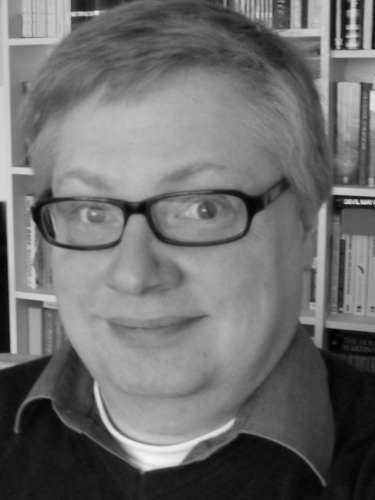
Gabrielle Kimm’s novel His Last Duchess was published by Sphere (imprint of Little, Brown) in August 2010, her second book, The Courtesan’s Lover, is to be published by same imprint in November 2011. Gabrielle has sold her books to the USA, to Turkey, Brazil, Portugal, the Czech Republic and Croatia.
Author photograph by Charlie Hopkinson 2010
WEBSITE – BLOG
Gabrielle’s books
The Courtesan's Lover


Gabrielle Kimm was talking to Maureen Vincent-Northam, co-author of The Writer's ABC Checklist

What was the first thing you had published?
The first piece of writing of mine I saw in print was the first chapter (as it then was) of my second novel, ‘The Courtesan’s Lover’ – which was then entitled ‘The Courtesan’s Choice’. It was shortlisted for the Impress Prize for Fiction at the end of 2007 and all ten ‘shortlistees’ were included in a published anthology. My first novel, ‘His Last Duchess’ was at the time being touted round agents. I was taken on by the Greene & Heaton literary agency very shortly after that, and ‘His Last Duchess’ was published by Little, Brown (Sphere) in 2010.
What are your writing strengths and weaknesses?
Oh, that’s such an impossible question! I don’t know if it’s a strength, but I just love the whole process of writing – everything from the wild excitement of initial inspiration and first drafting, through to the painstaking, line-by-line business of copy-edit checking. I’m a horribly nit-picking perfectionist (as my writing group will tell you, holding their heads and groaning). I can lose confidence, though, and I’m never fully satisfied with anything I write. (Now you’ve asked that question, I’m worrying that I have some awful weakness that I don’t know about!)

Do you have a writing routine or any odd writing quirks?
I don’t really have the luxury of having a routine. I teach a couple of days a week, and have teenage children and an elderly dog, and all these things take up time. I basically write in every moment I have available in which to do so (and quite a lot of moments in which I ought to be doing something else). Having said that, I do write best in the morning, so I tend to try to organise my free days around that. But I so badly crave time to write that I wouldn’t want to limit it by demanding any sort of routine. I always write straight onto my computer – partly because I like the ease and the neatness and the ‘printed’ look of it, but also because about five years ago I cut my right hand very badly (I fell over whilst carrying a big glass bowl and severed a nerve) and since then, holding a pen for any length of time is quite uncomfortable for me.
Is there a special place you like to write?
I always write in my little study – it’s chronically untidy, but rather charming, and I love it. It looks out over my quiet village street, so I can keep a nosy eye on what my neighbours are up to. There’s a desk on which are: my computer, a blizzard of bits of paper, a rather embarrassing collection of part-empty mugs and a very small teddy bear called Robert. In the room there is also a lovely old junk-antique velvet-upholstered chair, a small table, hundreds of books and a dog basket. Once a year or so, I try to get away for a week, just me and the dog, to write uninterrupted, away from the internet and the telly and other distractions.
How important is it to you to plot your novels?
Before I start a book, I have to know roughly how it’s going pan out, and how it’s going to end. It’s not a ‘fixed in stone’ sort of plan, but I do need a definite ‘throughline’, though that might be pretty fluid, and I’m happy for it to change if it needs to. But having that rough sense of how I want the story to go gives me a sort of map, so I don’t feel lost as I step out into the uncharted waters of a new narrative (sorry – that sounds rather ‘Pseuds’ Corner-ish’!)
Are your characters ever based on people you know?
No. Not intentionally, but sometimes as I read back over what I’ve written, I find things that unexpectedly remind me of people. One funny story – when I was shortlisted for the Impress Prize, with ‘The Courtesan’s Lover’, I went to the reception for the presentation of the prize (the winner was a wonderful writer called Carol Fenlon). I got into conversation with one of the judges; after a few minutes chat, he said, “Do you find yourself identifying very strongly with your characters? What I mean to say is, is Francesca you?” (Francesca being my eponymous courtesan). I tried to keep a straight face, and said, “Well, given that she’s a wildly promiscuous and extremely wealthy Neapolitan whore, I suppose the answer to that question has got to be ‘no’, really.” The friend I was with fell about laughing and the aforesaid judge went a rather delightful shade of dark pink.

Have any authors influenced your own work?
I fell in love with historical fiction as a child, when I first read Rosemary Sutcliff’s lovely novels for children set in Tudor times (The Armourer’s House, The Queen Elizabeth Story, Brother Dusty Feet, etc). Her delight in the minutiae of domestic life in previous centuries has stayed with me, I think. It’s harder to pinpoint specific influences more recently. I’m probably influenced in some way by everything I read – and like all writers, I read a lot!
What qualities do you think writers should have?
Tenacity and determination. Without a doubt. Writing a novel takes AGES and needs a huge commitment both in terms of time, and emotional energy, and you need to be seriously determined to see the project through. You need empathy, too, and curiosity about people and the ways they think and feel and behave. Being observant is important – I watch and record people and things all the time, usually just mentally but sometimes into a notebook (oh dear, that makes me sound rather dodgy and obsessive ...). And you need to love the process of writing, too, obviously!
What are you working on at the moment?
I’m in the very early stages of my third novel – I’m not ready to talk about it yet, though! It’s like a little tender shoot, that hasn’t been hardened off yet.
What advice would you give to an aspiring novelist?
Believe in yourself and your work, and never, ever give up! It can be so tough getting started, and very few people have an easy ride to a publishing deal. I didn’t! (See my blog post about my search for an agent – (http://gabriellekimm.co.uk/2011/03/09/pack-a-bag-and-prepare-for-the-long-haul). But if you want it badly enough, you need to stick with it. Agents and editors always say that ‘a story that HAS to be read, WILL be read, eventually’ – so if you are writing a story that you know in your heart simply HAS to be read – keep going, and it’ll happen. A lovely MA tutor said to me several years ago when I was feeling disheartened, “Stand on the doorstep with your finger on the bell, and don’t stop ringing. Eventually they’ll open the door and let you in just to shut you up!”