Sunday, 9 April 2017

Monday, 3 April 2017
Passion on the Dance Floor!

There's passion on the Dance Floor in Cait O'Sullivan's new book!
On return from a trip around the world, TV
presenter, Ava Whittaker, has a baby by Matthias de Romero, Argentine Tango
champion, hacienda owner, and the man she loves. The problem? He doesn't know.
Fast forward two years, and Ava reluctantly
agrees to be a contestant on a new dance show on TV, but to her shock, Matthias
– the man she never expected to see again – is one of the judges.
Matthias de Romero is leaving his beloved stallions in Argentina to assuage his pride. Two years previously, the one woman he thought he could care for walked out on him after just one glorious night. He arrives in London ready for revenge.
Will Ava’s secret cause their intense feelings to burn out, or fan further the flames of love?
Matthias de Romero is leaving his beloved stallions in Argentina to assuage his pride. Two years previously, the one woman he thought he could care for walked out on him after just one glorious night. He arrives in London ready for revenge.
Will Ava’s secret cause their intense feelings to burn out, or fan further the flames of love?
“Ava, wait until you hear what I’ve got
for you… The pilot of a new dance show, To Dance or Not to Dance.”
Ava Whittaker choked on her cup of tea,
dropping the phone in her fluster. Her agent must have gone mad if she thought
this totally preposterous idea was anything but. She picked the phone
back up and caught it between her ear and shoulder to clear away the lunch
dishes.
“Absolutely not. Sorry, Caroline, I don’t dance.”
So what does she do? What would you do? Ava is a single mum
on maternity leave from her job as breakfast television presenter…she has been
out of the spot light for nearly three years, travelling for the first and
oh…guess you need to buy the book to see what happens. Then again, my favourite
passage might give you a hint:
“Ah,
good.” Daniel raised his voice and held his hand up to beckon someone over.
“Matt managed to make it. We're over here, Matt.”
Ava shook, the bubbly in her glass held
halfway to her mouth mimicking the tremors running through her. For pity’s
sake, get a grip. A tingling sensation accosted the base of her spine.
Matthias had no reason to be in London to judge a dancing competition.
But he was a dancer…
She grimaced to herself, making a
mental note to get out more. Jeez, the first time she left the house and look
what happened, imagining every man was Matthias. Perhaps her ability to
socialise had been stunted from the time spent in the safety of her own home.
Maybe her brain was a stuck record. Oh, who knew…
Ava stepped back from the circle to
allow space for the newcomer, and maintained a tighter grip on her shaking
glass. Her heart hammered as though someone had put it on loudspeaker. Keeping
her eyes downcast, she felt a presence loom closer. Apprehension squeezed her
heart. She drew a shuddering breath, a breath which told her all she needed to
know. The tantalising smell of dark amber and spices sent her nerves sky-high.
Daunted, she closed her eyes to the flickering images of her and Matthias in
the firelight, until she summoned the courage to open and take him in.
Wide shoulders encased in a white silk
shirt, opened at the neck. The sleeves, rolled to his biceps, enhanced the
muscles defined beneath the sheer material. Black, fine wool trousers hugged a
tapered waist, and while the light silk of his shirt did nothing to disguise
the six-pack, the thin fabric of his trousers showcased the powerful thighs
honed by years of breaking horses.
Shivers raced up and down her body, and
she fought against leaning closer to him.
The first time she met him, she’d been
in a heap at his feet, having just fallen off a horse on his ranch. Her
weakened legs now threatened to put her in the same position once more.
Swallowing hard, she summoned her courage and raised her chin.
Glacier eyes met hers. The gold flecks
hadn’t been imagined, but the temper crackling from the steady green gaze made
her jump, spilling champagne. The last time she’d looked into his eyes, they
had held nothing but passion; she had been the most beautiful girl in the
world. That memory slipped away shyly under a new contemptuous glare.
Matthias de Romero was in town.

There is a lot of me in Ava, I travelled the world on
my own but no, didn’t make passionate love with a hot Argentine rancher deep in
the Andes. But falling in love when I travelled was something I was so
conscious not to do—for the very reason that Ava leaves in the first place.
Love across continents is no easy thing, and I would’ve done the same as she.
You can generally find
Cait when she’s not in her writing cave or hanging around her favourite spots
in nature somewhere on the internet:
.
Monday, 6 March 2017
YOUR ATTENTION, PLEASE!

A very warm welcome to author Ailsa Abraham whose latest book, Attention to Death, is released on 10th March and is available to pre-order.
Thank you, Maureen, for
inviting me to talk about my latest release today. This is a departure
from my previous series in magical realism. Here I take off on murder mystery.
Why? Erm... limited attention span? Love of variety? Here is the info on it.
Finding a murderer
among a group of killers is not going to be easy for two Royal Army Military
Police investigators, Captain Angus Simpson and Staff-Sergeant Rafael ‘Raff’
Landen, whose Christmas leave is cancelled for an investigation into a
suspicious death on a base in Germany.

The case is further complicated by unhelpful senior officers who make
pre-judgements on colour, creed, race and sexuality. Yet the insight of the
investigators helps them uncover a sinister plot, although they too have
something to hide: their own fledgling relationship. Will Angus and Raff be able to solve the murder without giving away their
secret? The best and worst of human nature is represented in this story, which is why
it is suggested for over 18s only.
"In Attention to Death, Ailsa Abraham
pulls off something I wouldn't have thought possible - a steamy romance with a
twist of murder and a splash of social conscience. A remarkable book that will
have you turning pages as quickly as you can to find out what happens
next."
(India Drummond, author of the Caledonia Fae series)
(India Drummond, author of the Caledonia Fae series)
I delved into my past life
as an officer in the Royal Air Force and my lifelong friendships with gay men
to research this book. Coming right
after LGBT History Month in February, it highlights the problems that men who
have to be “in the closet” and the sort of bigotry that causes people to refuse
to read a book just because there are gay characters in it, although this
doesn't stop them leaving reviews. Me? I've never been too sure. I'm
gender-neutral which is why the first thing I wonder on meeting new people
isn't "What do they do in their bedrooms"?
Read it for yourself and decide. Is it an honest portrayal of two men doing their job who just happen to have started an affair?
Ailsa Abraham is
the author of six novels. Alchemy is the prequel to Shaman's Drum, published by
Crooked Cat in January 2014. Both are best-sellers in their genres on Amazon.
She also writes mystery romance.

She has lived in
France since 1990 and is now naturalized French. She enjoys knitting and
crochet and until recently was the oldest Hell's Angel in town. Her interests
include campaigning for animal rights, experimenting with different genres of
writing and trips back to the UK to visit friends and family. She is also addicted to dressing up, saying
that she is old enough to know better but too wise to care (pirate gear is her
favourite!)
.
Wednesday, 22 February 2017

Monday, 7 September 2015
Writers’ Village Contest winter 2015

£1000 top prize for short fiction in Writers’ Village Contest winter 2015
£1000 is the top prize on offer for short fiction in the Writers' Village International Short Fiction Award winter 2015, with cash prizes totaling £2000 The second prize is £500, third prize £250 and there are five runner up prizes of £50.
Ten further Highly Commended entrants will have their stories acknowledged at the site and gain a free entry in the next round.
Everyone wins because every contestant, win or lose, gains feedback on how their stories were graded - plus tips for improvement.
Winners will be awarded the title ‘Winner, the Writers’ Village International Short Fiction Award winter 2015’ and see their work showcased online.
Any genre of prose fiction may be submitted up to 3000 words, except playscripts and poetry. Entries are welcomed world-wide. The fee is £15 and multiple entries are permitted. Deadline is midnight 30th November 2015. Entry rules plus all winning stories since 2009 can be found at:
http://www.writers-village.org
.
Monday, 29 June 2015
Revolution Day

Thank you very much for inviting me onto your blog, Maureen, on the day my novel, Revolution Day, is published by Crooked Cat.
Revolution Day is my second
novel. Unlike my first (Zeus of Ithome, a historical novel about the struggle
of the Ancient Messenians to free themselves from Sparta in the 3rd century BC)
it is set in the present day, and the people and events - and even the country -
it depicts are entirely fictional.
It
follows a year in the life of Latin American dictator, Carlos Almanzor, who has
been the ruler of his country for 37 years. Now in his seventies, he is feeling
his age and seeing enemies around every corner. And with good reason: his
Vice-President, Manuel Jimenez, though outwardly loyal, is burning with
frustration at his subordinate position.
Carlos’ estranged and imprisoned
wife Juanita is writing a memoir in which she recalls the revolution that
brought him to power and how, once a liberal idealist, he changed over time
into an autocrat and embraced repression as the means of sustaining his
position. In this brief excerpt, she recalls the immediate aftermath of the
chaotic events which led to the deaths of both the old President Velazco and
Raul, the leader of the revolutionary movement, and brought Carlos (unexpectedly
and somewhat fortuitously) to power:
“I remember
nothing of the speech that Carlos delivered from the balcony that afternoon. Or
rather, I do not remember it as it was delivered then, though of course much of
it has been repeated year on year for decades, gradually becoming empty and
hackneyed, the subject of countless parodies. What I remember is my reaction to
the speech at the time, my feeling that it was apt, and full of emotional
power. It was also suspiciously well-structured and phrased, as if he had been
planning this moment for years, even though it had always been glamorous,
charismatic Raul, not middle-aged, pedantic Carlos who was supposed to become
the President. But most of all, what I remember is the crowd. No longer an
angry mob, they were dancing and cheering and singing songs. And they were
cheering for us, for Carlos most of all, of course, but for all of us; when I
waved, they cheered; when I blew them a kiss, they blew kisses back. I felt
suffused by their joy and their love, and found myself laughing out loud, that
this day of fuck-ups and murder and revenge and treachery had somehow turned
out to be the greatest day of my life and possibly the greatest day in all
history. Despite everything that has happened since, the happiness of that
moment lives with me still.”
When Manuel’s
attempts to increase his profile are met with humiliating rejection, he
resolves to take action. As he moves to undermine Carlos’s position and make
his own bid for power, Juanita will eventually find herself an unwitting
participant in his plans.
If your
readers are intrigued, they can find out more on my website and Facebook authorpage, and they will be very welcome to drop in on the Facebook launch event,
where there will be competitions and other fun things to do with the book.
Many thanks once again for hosting me, Maureen - and good luck with Trace your Roots!
 Tim Taylor
was born in 1960 in Burslem, Stoke-on-Trent, UK. He grew up just outside the
city in Brown Edge, then at the age of 11 moved to Longsdon, near Leek. Tim went to Newcastle-under-Lyme High School,
then studied Classics at Pembroke College, Oxford. After graduating he moved to
London and spent a couple of years playing guitar in a rock band. When it
became clear that he was never going to be a rock star, he sadly knuckled down
and joined the Civil Service, where he did a wide range of jobs before leaving
in 2011 to spend more time writing. While
still in the Civil Service Tim studied part time for a PhD in Philosophy at
Birkbeck, University of London, achieving it in 2007.
Tim Taylor
was born in 1960 in Burslem, Stoke-on-Trent, UK. He grew up just outside the
city in Brown Edge, then at the age of 11 moved to Longsdon, near Leek. Tim went to Newcastle-under-Lyme High School,
then studied Classics at Pembroke College, Oxford. After graduating he moved to
London and spent a couple of years playing guitar in a rock band. When it
became clear that he was never going to be a rock star, he sadly knuckled down
and joined the Civil Service, where he did a wide range of jobs before leaving
in 2011 to spend more time writing. While
still in the Civil Service Tim studied part time for a PhD in Philosophy at
Birkbeck, University of London, achieving it in 2007.Tim’s first novel, Zeus of Ithome (a finalist in the Chaucer Awards for historical fiction), was published by Crooked Cat in November 2013; his second, Revolution Day in June 2015. He has also published a non-fiction book, Knowing What is Good For You (Palgrave Macmillan 2012), on the philosophy of well-being. As well as novels, Tim writes poetry and the occasional short story. He also plays electric and acoustic guitar and a little piano, and likes to walk up hills.
Connect with Tim on Twitter
Tim's Crooked Cat author page
Buy Revolution Day on Amazon UK and Amazon.com
.
Saturday, 25 April 2015
Flash Fiction Competition

Write a complete story in just 500 words.
This quarterly open-themed competition has closing dates of 31st March, 30th June, 30th September and 31st December. The results are announced within six weeks of each closing date and the three winning entries each quarter will be published on the Flash 500 website.
Prizes
1st - £300 plus publication in Words with Jam
2nd - £200
3rd - £100
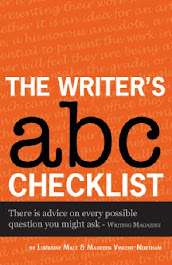
Highly commended - choice of The Writers' ABC Checklist or Bad Moon Rising
Entry fee: £5 for one story, £8 for two stories
Optional critiques: £10 per story